

67.6 F
San Diego
Tuesday, June 2, 2026
Tang Soo Do Karate Social Media
$0.00

No products in the cart.

Home Blog Page 2

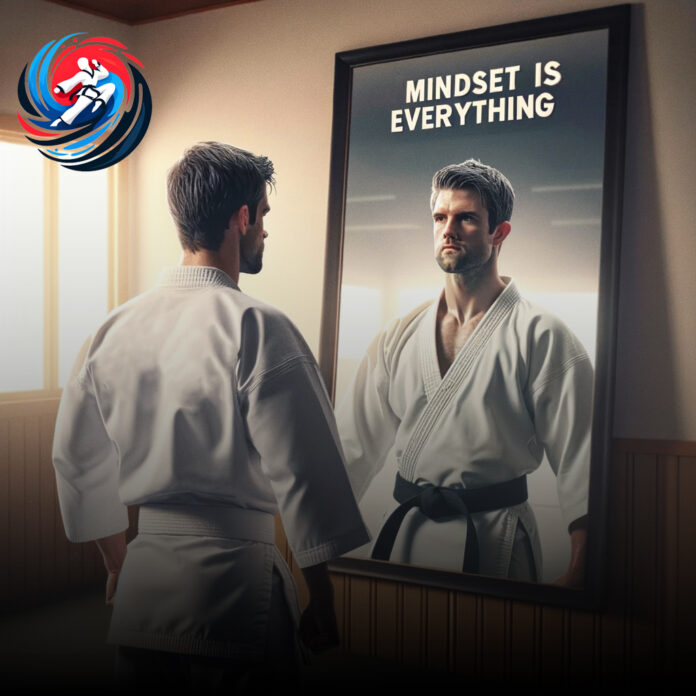
Mindset is Everything in Tang Soo Do Karate and Life!


🧠 Harness the Power of a Positive Mindset!

In Tang Soo Do, your mindset is your most powerful weapon. 🥋🧠 It’s the difference between pushing through a tough training session or giving up, between achieving your goals or falling short. The same principle applies to life!

💪 Embrace Determination and Focus

Whether you’re on the mat or tackling life’s challenges, a positive and determined mindset will always guide you to success. 💪✨ Embrace the spirit of perseverance, focus, and humility in all you do. Remember, the body follows where the mind leads!

🔥 Unlock Your Limitless Potential

When you believe in yourself, you unlock limitless potential. Every punch, every kick, and every stance starts with the right mindset. 🥋🔥 You are capable of greatness, both in the dojang and in life. When obstacles arise, face them with courage and determination. 💥💪

🌟 Rise Stronger with Every Challenge

Success isn’t about never falling; it’s about rising every time you fall. 🌟 Every challenge is an opportunity to grow stronger, wiser, and more resilient. 🌱 Believe in your journey, trust your training, and always strive for excellence.

🥋 Apply Martial Arts Wisdom to Life

Your Tang Soo Do training teaches you discipline, respect, and an indomitable spirit. 🥋✨ Apply these lessons to your daily life, and watch how you transform challenges into triumphs. 🌟

💫 Stay Positive, Stay Unstoppable

Stay focused, stay determined, and keep pushing forward. Remember, your mindset shapes your reality. Embrace a positive, unstoppable mindset, and achieve greatness in all you do!
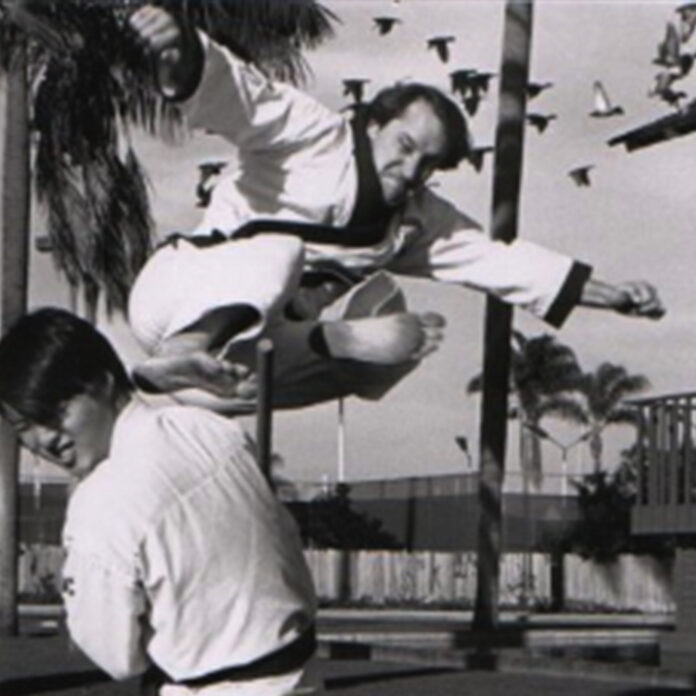
Embrace the Split for Ultimate Mastery!

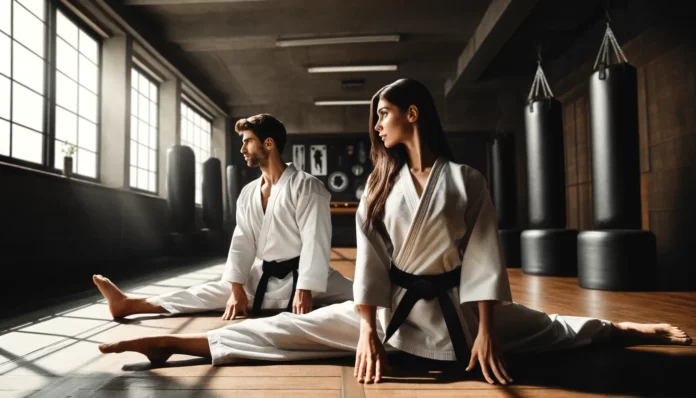
Martial Artists doing splits

🥋As a seasoned Tang Soo Do practitioner, I’ve often encountered the question: “Why do we practice doing the splits in class?” Let’s dive into the profound benefits, origins, and reasons behind this essential practice. 💪✨

🔹 Historical Roots: The practice of doing splits can be traced back to ancient martial arts traditions, particularly in disciplines like Shaolin Kung Fu and Taekwondo. These arts emphasized flexibility and agility, recognizing the importance of these attributes in combat and self-defense. The Shaolin monks, known for their rigorous physical training, incorporated splits to enhance their overall martial prowess. 🏯🌿

🔹 Flexibility & Range of Motion: Practicing the splits significantly enhances our flexibility, allowing for a greater range of motion in our kicks and techniques. This flexibility not only improves our performance but also helps prevent injuries. Improved range of motion ensures that our techniques are executed with maximum efficiency and power. 🤸‍♂️🦵

🔹 Strength & Balance: The journey to achieving the splits builds tremendous strength in our legs and core. It also enhances our balance, crucial for executing powerful and precise moves. Strengthening these muscle groups is vital for maintaining stability and control during complex maneuvers. 🦵🏋️‍♂️

🔹 Mental Discipline: Mastering the splits requires perseverance and mental fortitude. This discipline translates into other aspects of our training and life, fostering a strong and indomitable spirit. The mental challenge of pushing through discomfort and gradually improving flexibility mirrors the challenges we face in our martial arts journey and beyond. 🧠💪

🔹 Martial Arts Excellence: Flexibility is a key component in executing high-level techniques with grace and power. Whether it’s a high kick or a low stance, the ability to perform the splits elevates our overall martial arts proficiency. Techniques such as high kicks, sweeps, and certain grappling moves become more effective and aesthetically pleasing with enhanced flexibility. 🥋🔥

🔹 Health & Well-being: Beyond martial arts, the practice of doing splits contributes to overall physical health. It improves blood circulation, reduces muscle tension, and enhances posture. These benefits extend to our daily lives, promoting a healthier and more active lifestyle. 🌟🧘‍♂️

Let’s continue to push our limits, embrace the challenge, and reap the countless benefits of practicing the splits. Together, we grow stronger, more flexible, and more disciplined. Keep striving, keep stretching, and let your spirit soar! 🚀🌟

Master Eric R. King: A Martial Arts Journey of Perseverance and Excellence

From Challenging Beginnings to Martial Arts Mastery

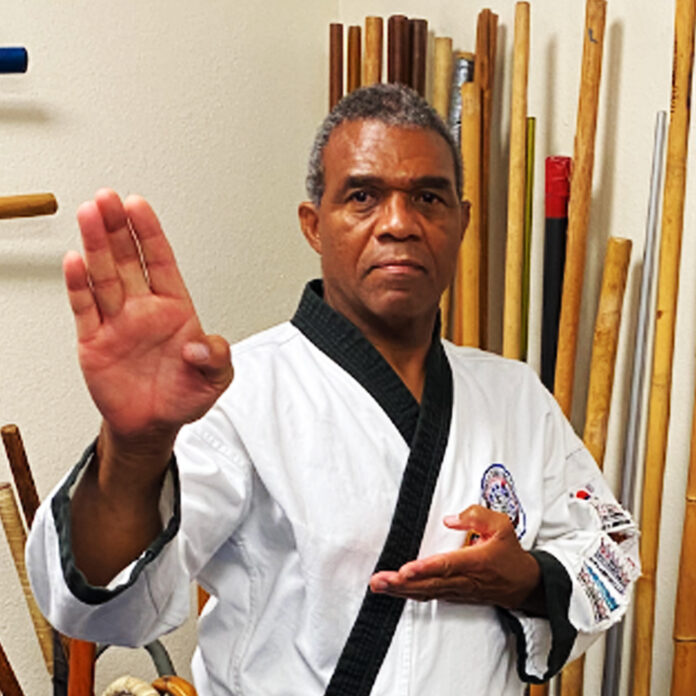
Master Eric R. King’s journey is a testament to the transformative power of martial arts. Growing up in the challenging environment of Southern California, he found his refuge and purpose in “Sticky Hand Kung-Fu” under the guidance of Sifu Isaac. At the age of 14, when his family moved to San Diego, Master King continued his training amidst the difficulties of his new surroundings. His determination and resilience shone through as he excelled not only in academics and sports but also in arts and music. 🎓🎨🏅

Choosing Martial Arts Over Street Fights

Surrounded by the harsh realities of drug houses and gang violence, Master King saw martial arts as a way to stay out of trouble and strive for a better life. He quickly realized that while street fights could lead to legal trouble, competing in local tournaments offered rewards and respect. His skill and dedication earned him a reputation as a local favorite and champion. In 1992, with his instructor’s blessing, Master King founded Art In Motion Karate, a school that has since become a cornerstone of the martial arts community in Southern California. 🥋🏆

Establishing and Expanding Art In Motion Karate

In 1995, Master King relocated to New Jersey, where he re-established Art In Motion Karate. Despite the challenges of starting anew, his passion and commitment saw his school thrive. In 2004, upon returning to San Diego, he successfully tested for his 4th degree black belt and later earned his 5th degree under the E.U.S.A.I.M.A.A., recognized by Grand Masters John C. Kanzler and Marty Manuel. His dedication to the art has been acknowledged with inductions into five halls of fame, including the prestigious World Head of Family Sokeship Council in Orlando, FL. 🥇🌍

Beyond Martial Arts: Teaching and Music

Master King’s influence extends beyond martial arts. He has also made significant contributions in teaching gymnastics and tumbling, showcasing his versatility and dedication to physical education. His love for music is evident as he skillfully plays the bass, drums, and keyboard. But perhaps most importantly, Master King is deeply passionate about mentoring young people. He believes in training them with love, discipline, and respect, cultivating not only better athletes but better individuals. His philosophy is simple yet profound: “Train up our children with love, discipline, and respect, and we will build a better today and an even brighter tomorrow.” 🎶❤️

Early Inspirations and Influences

Master King’s journey was sparked at a young age when his mother introduced him to martial arts by showing him the trailer for Bruce Lee’s “Way of the Dragon.” This early exposure ignited a lifelong passion. His first formal training was in Wing Chun, taught by Sifu Isaac, a butcher at a local supermarket in Los Angeles. Throughout the late 1980s, he encountered influential martial artists like Sensei Danny of Shaolin Kempo Karate and Master Glenn Small under Grand Master Fred Villari. These encounters, along with his training under Master Kenny Purnell of Allied Garden Tang Soo Do, shaped his martial arts philosophy and skills. 🥋👊

Inspiring Future Generations

Master King’s story is one of resilience, transformation, and dedication. His legacy continues to inspire students and martial artists around the world, proving that with perseverance and passion, one can overcome any obstacle and achieve greatness. 🌟

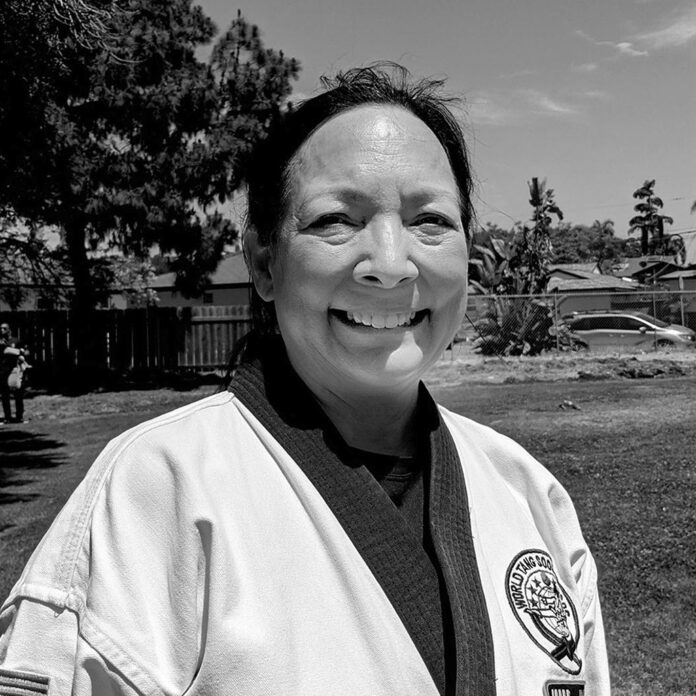
The Inspiring Journey of Master Clare Marsch: Yuk Dan Master at Allied Gardens Tang Soo Do

Beginnings in Martial Arts

Master Clare Marsch’s dedication to the martial arts is a testament to perseverance, passion, and leadership. Her journey began in 1973, during her undergraduate studies at Loyola Marymount University in Los Angeles, where she first immersed herself in Korean martial arts. She further honed her skills in a Japanese martial arts style while pursuing graduate studies at the State University of New York at Albany.

Transition to Tang Soo Do

In 1979, Master Marsch relocated to San Diego and began training in Tang Soo Do under Master Young H. Kwon. Three years later, Master Hong Ku Baek took over the school, incorporating Hap Ki Do and Ki Gong into the curriculum. Master Marsch earned her Cho Dan in 1982, marking the beginning of her teaching career in Tang Soo Do.

Leadership at UC Tech Tang Soo Do

From 1983 to 2001, Master Marsch was the Chief Instructor at her own dojang, UC Tech Tang Soo Do in San Diego. Her expertise and dedication were recognized when she won the Grand Champion Female Cup at the 1992 World Championship in San Diego, CA. Her commitment to excellence continued, and in 1996, she was promoted to Sah Dan Master at the World Championship in Las Vegas, NV. This promotion was particularly significant as she was one of only three female candidates—alongside Master Carla Bennet and Master Carole Coker—promoted to Master at that time.

Master Clare Marsch: Pioneering Achievements and Contributions to WTSDA 🌍👏

Master Clare was promoted to 6th Dan last year – 2023, making her the first female 6th Dan Master in The World Tang Soo Do Association.

Achievements and Contributions to WTSDA

In 2016, Master Marsch achieved the rank of Oh Dan Master and joined the instructional team at Allied Gardens Tang Soo Do, working alongside Master Kenny Purnell and Master Patrick Marsch.

Master Marsch’s contributions to the World Tang Soo Do Association (WTSDA) have been profound. In the mid-1990s, she collaborated with Master Frank Waller to develop the proposal for the WTSDA Scholarship program, aimed at benefiting students within the association. In 2002, Grandmaster Shin appointed her as the first female Regional Director when Region 20 was established. She also played a crucial role in the development of the WTSDA Judges Training Certification program as a committee member under Master William Strong’s leadership.

Her dedication to promoting women and children’s participation in martial arts is evident through her chairmanship of the Women and Children’s Committee. She organized the 2018 WTSDA Women’s Demo, which featured over 450 female martial artists. Currently, Master Marsch serves on the WTSDA Strategic Planning Committee, providing oversight to the Marketing and Branding team.

Personal Life and Legacy

Master Clare Marsch’s personal life is equally fulfilling. She is married to Master Patrick Marsch, and together they are the proud parents of three grown children: Patrick, Nicole, and Elena Marsch.

Master Clare Marsch’s journey in Tang Soo Do is a remarkable story of commitment, leadership, and the continuous pursuit of excellence. Her legacy serves as an inspiration to martial artists around the world.

Master Kenneth Purnell: A Journey of Dedication and Martial Arts Wisdom

Introduction

Master Kenny Purnell is the owner and Master Instructor at Allied Gardens Tang Soo Do Karate Academy, where he teach alongside Master Clare and Pat Marsch. This is the story of his martial arts journey, filled with dedication, perseverance, and the wisdom gained from countless mentors and experiences.

Early Beginnings

Master Purnell’s martial arts journey began in 1966 at the YMCA in Benton Harbor, Michigan. He enrolled in a 12-week martial arts program called Shotokan. This brief but intense introduction ignited a passion within him, and he knew from that moment that he wanted to become a Blackbelt.

A New Chapter in San Diego

In 1976, he moved to San Diego, California. Each day on his way to work, he passed by a martial arts school. One day, curiosity led him to stop in, and that’s when he met Master Young H. Kwon. At that time, the school was part of the Moo Duk Kwan Federation. Under the guidance of Master Young H. Kwon and Master Larry D’Ercole, I earned my 1st Dan Blackbelt in 1981.

1986: World Tang Soo Do Association World ChampionIn 1986, Master Purnell achieved a significant milestone by becoming the first World Tang Soo Do Association World Champion. This accomplishment marked a high point in his competitive career and showcased his dedication and skill in martial arts.

Growth and Leadership

As the years passed, Master Larry D’Ercole took over the leadership of the school, reforming it to become part of the World Tang Soo Do Association. Master Purnell began assisting Master D’Ercole in teaching classes, further developing his skills and understanding of martial arts. He profoundly grateful to Master D’Ercole for his years of knowledge, patience, wisdom, and training, which have shaped him into the martial artist he is today.

Mentors and Partnerships

Throughout his martial arts journey, many individuals have contributed to his growth. One of these key figures is Mr. Clarence “Lucky” Ellison. In 1988, Lucky and Master Purnell  opened our first Tang Soo Do school together. He was not only his mentor in life but also my partner in Tang Soo Do training.

Inspiration and Community

Master Larry D’Ercole, Master Pat, and Clare Marsch have been, and continue to be, his inspiration. They remind him of the importance of staying united, dedicated, humble, focused, and loyal. Their influence motivates him to give back to the community and to each other.

Conclusion

Master Purnell in martial arts is a testament to the power of dedication, the influence of mentors, and the importance of community. As he continue to teach and learn at Allied Gardens Tang Soo Do Karate Academy, he is committed to passing on the values and wisdom he has gained to the next generation of martial artists.

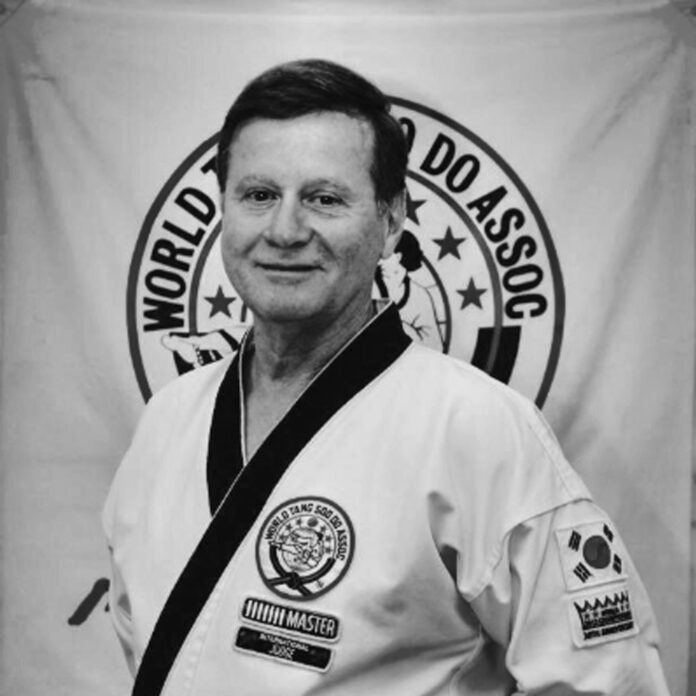
The Journey of Master Laurence D’Ercole: A Legacy of Discipline and Honor

A Humble Beginning

“A journey of a thousand miles begins with a single step.” – Lao-Tzu

The martial arts journey of Master Laurence D’Ercole began in the early 1970s, ignited by a group of newly arrived Korean martial artists near his hometown in the Philadelphia area. His instructor, Kwon, Young Hyuck, led fierce, serious, and often brutal training sessions that spanned 2-3 hours. Language and cultural barriers presented challenges for both student and instructor, but the dojang was not a place for comfort or socializing; it was a crucible for developing the right attitude. Training amidst hardship, exercising extreme respect, and learning about genuine honor were paramount. In those days, Master Shin was the chief and examiner for most rank tests, and students were often awed by demonstrations from Shin and other visiting masters.

Expanding Horizons

After achieving Cho Dan rank in 1976, Master D’Ercole relocated to Chula Vista, CA, where he continued his training. He eventually operated schools in Chula Vista and Mira Mesa, and later expanded into Mexico. In 1982, the World Tang Soo Do Association (WTSDA) was formed, and he was appointed Regional Director for the development of schools throughout Mexico and Latin America, venturing into new frontiers.

Milestones of Achievement

In 1984, Master D’Ercole was one of five delegates selected for the first WTSDA China Mission, where he gained a profound understanding of discipline. In 1985, he received the prestigious “Instructor of the Year” award, and in 1987, he was presented with the master’s rank and the “Master of the Year” title by the WTSDA. His days were filled with learning, teaching, training, and traveling. Working with students of all ages taught him much, and he often responded to questions about his patience with children by saying, “That’s easy, THEY TAUGHT ME.” The self-satisfaction of students working hard and achieving their goals provided him with a sense of purpose and responsibility.

Timeless Values

Today, the training conditions and technology have improved martial arts considerably, but Master D’Ercole cherishes the mental strengths developed from his own raw beginnings. The classroom respect, codes, and tenets are the fabric of their structure, and these traditional values have left an immeasurable impact on his life. He emphasizes the importance of always honoring your instructor, teacher, parents, and country.

Tang Soo!

The journey of Master Laurence D’Ercole is a testament to the enduring principles of Tang Soo Do, where discipline, respect, and honor are not just taught but lived.

Master Patrick Marsch: A Legacy of Dedication and Martial Arts Mastery

Early Beginnings and Training

Master Patrick Marsch’s journey in Korean martial arts began in 1972 while attending Loyola University in Los Angeles. Driven by a passion for martial arts, he sought out training opportunities, which led him to San Diego after his graduation. In San Diego, Master Marsch trained in various martial arts schools, absorbing diverse techniques and philosophies that would shape his future in Tang Soo Do.

Training Under Master Young H. Kwon

In 1979, Master Marsch’s path converged with Master Young H. Kwon, under whom he began rigorous training in Korean Tang Soo Do. Master Kwon’s influence was profound, providing Master Marsch with a solid foundation in the art. The Chula Vista school where Master Kwon taught was home to an eclectic group of martial artists, including Laurence “Larry” Dercole, Jeffrey St. James, and Kenneth Purnell. This diverse environment fostered a rich exchange of techniques and ideas, further enriching Master Marsch’s martial arts expertise.

Transition and New Beginnings

When Master Kwon moved back to Philadelphia, he entrusted the school to Master Hong Ku Beck, who introduced Hapkido and Ki Gong to the curriculum. Master Han continued teaching Tang Soo Do, ensuring the continuity of the traditional art. With Master Beck’s departure from San Diego, Master Marsch joined forces with Jeffrey St. James to start a new Tang Soo Do club at the University of California, San Diego (UCSD).

Joining the World Tang Soo Do Association

In 1982, Master Marsch received an invitation from Master Dercole to join the World Tang Soo Do Association under the esteemed Grandmaster Jae Chul Shin. This marked a significant milestone in his martial arts career. Attending the initial conference in Philadelphia, Master Marsch became part of a global network dedicated to the propagation of Tang Soo Do.

Teaching and Expanding Tang Soo Do

Throughout the subsequent years, Master Marsch dedicated himself to teaching at UCSD and collaborating with Grandmaster Shin and Master Dercole to expand World Tang Soo Do into parts of Mexico. His efforts played a crucial role in spreading the art and philosophy of Tang Soo Do beyond borders.

Recognition and Leadership

In 1992, Master Marsch’s commitment and skill were recognized when he was invited to the World Tang Soo Do Master Training Camp in Florence, Alabama. Two years later, in 1994, he was promoted to Master Instructor (4th Dan), a testament to his dedication and expertise. Continuing his journey of excellence, Master Marsch achieved the rank of Senior International Instructor (6th Dan) in 2018. His leadership capabilities were further acknowledged in 2004 when he was appointed Regional Director for Region 20.

Continuing the Legacy

Today, Master Marsch joins Master Kenneth Purnell and Master Clare Marsch at Allied Gardens Tang Soo Do. His decades of experience, dedication, and wisdom are invaluable assets to the martial arts community. Master Marsch’s journey is a testament to the enduring spirit of Tang Soo Do, embodying the tenets of Integrity, Concentration, Perseverance, Respect & Obedience, Self-control, Humility, and Indomitable Spirit.

Through his unwavering commitment to the art and his students, Master Patrick Marsch continues to inspire and shape the next generation of martial artists, ensuring that the rich legacy of Tang Soo Do thrives for years to come.

Karate Studio Marketing Ideas


Here is some marketing content that can be used in your next flyer or even a social media posts to boost foot traffic to your Karate studio!

🌟🥋 Tang Soo Do Family & Friends Day! 🥋🌟

Join us for a day of fun, learning, and martial arts magic! Whether you’re a seasoned martial artist or just curious about what we do, this event is for YOU!

📅 Date: [Insert Date Here]
🕒 Time: [Insert Time Here]
📍 Location: [Insert School Location Here]

What’s Happening?

  • 🥋 Live Demonstrations by our skilled students and masters!
  • 🎯 Interactive Workshops where you can learn the basics and test your skills!
  • 🍽 Cultural Potluck – bring a dish to share and enjoy a feast of flavors!
  • 🎉 Fun Activities for all ages!

👨‍👩‍👧‍👦 Bring your family and friends to experience the spirit of Tang Soo Do. This is a fantastic opportunity to meet our community and see why Tang Soo Do is more than just martial arts – it’s a way of life!

📢 RSVP now and don’t miss out! Let’s kick it together in the spirit of unity and martial arts excellence! 🌐

Allied Gardens Tang Soo Do Karate

Allied Gardens Tang Soo Do Karate

Allied Gardens Tang Soo Do Karate Academy: Building Stronger Individuals for Over 30 Years

For more than three decades, Allied Gardens Tang Soo Do Karate Academy in San Diego has been dedicated to offering high-quality Karate instruction to individuals of all ages. Our academy is a beacon of positive energy and self-improvement, where students are encouraged to develop self-esteem and confidence through expert training in the art of Tang Soo Do.

Meet Master Kenneth Purnell

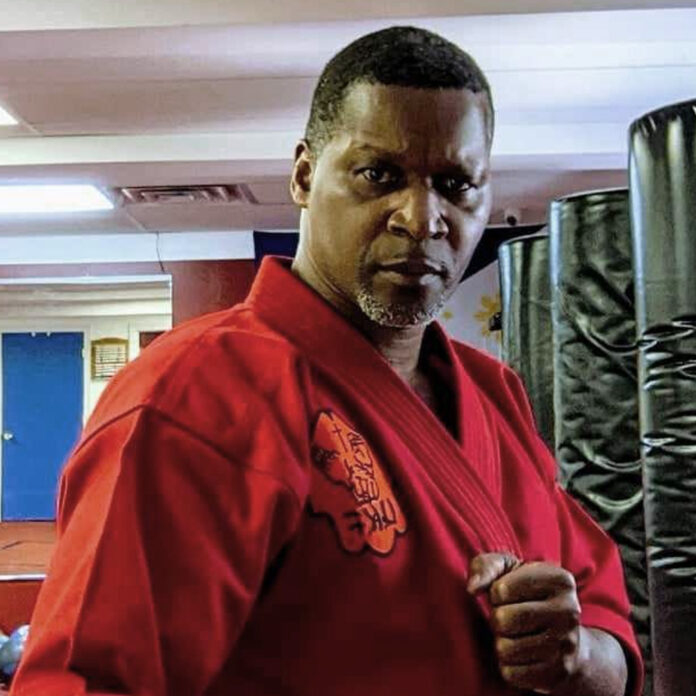
At the helm of our academy is Master Kenneth Purnell, a 7th Degree Black Belt with a passion for nurturing the potential of each student. Master Purnell specializes in preparing students to become confident and successful members of society. His approach is rooted in teaching the foundational 5 Codes and 7 Tenets of Tang Soo Do, which are designed to foster strong, productive individuals both in school and in life. Master Purnell’s exceptional ability to guide children towards achieving their full potential sets our academy apart.

A Comprehensive Training Experience

Our certified instructors at Allied Gardens Tang Soo Do Karate Academy ensure that every class is a blend of fun, excitement, and serious martial arts training. We believe that while learning a martial art can be enjoyable, it is also a serious commitment that requires dedication and respect. Our curriculum is designed to instill life skills, build stronger character, and promote virtues that enhance humanity.

Our Commitment to Excellence

Master Purnell’s mission is clear: to help all students, starting as young as age 5, reach their full potential through:

  • Personal Instruction: Master Purnell personally teaches each class, ensuring that every student receives individual attention and guidance.
  • Challenging Classes: Our classes are designed to be challenging, keeping students engaged and motivated to push their limits.
  • Goal Setting: We assist students in setting and achieving goals that are essential for success both in and out of the dojo.
  • Confidence and Self-Esteem: Through learning self-defense, students gain confidence and self-esteem, equipping them with the tools to handle various life situations.
  • Family Environment: We foster a family-like environment where students support each other and grow together.

Allied Gardens Tang Soo Do Family

At Allied Gardens Tang Soo Do Karate Academy, they are more than just a martial arts school; they are a community dedicated to personal growth and excellence. Whether you are a parent looking to instill discipline and confidence in your child or an adult seeking a fulfilling way to enhance your physical and mental well-being, our academy is the perfect place for you.

Experience the transformative power of Tang Soo Do with Master Kenneth Purnell and the  team of certified instructors.

The Origins and Evolution of Khiap in Tang Soo Do: Enhancing Your Practice with Vocal Power

By Jose R., Senior Writer for Tang Soo Do Karate

The Historical Roots of Khiap

In the world of martial arts, the khiap (also spelled kihap or kyap) is more than just a sound—it’s a profound expression of a warrior’s spirit. This vocal exclamation, deeply embedded in Tang Soo Do and other martial arts, has ancient roots that stretch back to the earliest combat traditions of East Asia.

The term “khiap” itself is derived from the Korean language, combining “ki” (energy) and “hap” (harmony or gathering). The practice likely originated in ancient Korean and Chinese martial arts, where warriors used vocalizations to concentrate their energy, intimidate opponents, and enhance their physical power. Over centuries, the khiap evolved, becoming a staple in various martial arts forms, including Tang Soo Do.

Why Do We Still Use Khiap Today?

Despite technological advancements and modern training methods, the khiap remains a vital component of martial arts practice. Here’s why:

  1. Energy Focus and Power Amplification: Khiap channels your inner energy, or “ki,” into a single, powerful burst. This focus can significantly enhance the effectiveness of your strikes, blocks, and kicks.
  2. Breath Control and Physical Efficiency: Proper breathing is crucial in martial arts. Khiap ensures you exhale forcefully at the moment of impact, maximizing your technique’s efficiency and preventing the common pitfall of holding your breath.
  3. Psychological Edge: A well-timed khiap can startle and unsettle an opponent, providing a psychological advantage. It signals confidence, strength, and readiness, often causing hesitation or intimidation in a confrontational scenario.
  4. Rhythm and Coordination: Khiap helps maintain the rhythm and timing of your movements, particularly in forms (hyungs). It acts as an auditory marker, synchronizing your physical actions with your mental focus.

Enhancing Your Khiap: Tips for Improvement

To make the most of your khiap, consider these tips:

  1. Engage Your Core: The power of a khiap comes from your diaphragm, not your throat. Engage your core muscles and project the sound from your abdomen to generate a strong, resonant exclamation.
  2. Practice Breath Control: Integrate khiap into your breathing exercises. Inhale deeply before executing a technique and exhale sharply with your khiap, ensuring a smooth, forceful release of energy.
  3. Be Consistent: Use khiap consistently during training. Whether practicing forms, sparring, or performing self-defense techniques, make it a habitual part of your routine.
  4. Focus on Timing: Khiap should coincide with the peak of your technique—when your strike or block makes contact. This synchronization maximizes the impact and effectiveness of your movements.
  5. Train with Intensity: Treat every khiap as a vital component of your practice. Vocalize with intensity and purpose, reinforcing the mental and physical aspects of your training.

Conclusion

The khiap is more than just a shout—it’s a vital tool that connects modern Tang Soo Do practitioners with centuries of martial arts tradition. By understanding its origins, appreciating its benefits, and dedicating yourself to its practice, you can harness the full power of your khiap. Embrace this ancient technique, and let your voice echo the spirit of Tang Soo Do, guiding you toward mastery and excellence in every aspect of your training.


About the Author

Jose Rodriguez is a seasoned Tang Soo Do martial artist and a Senior writer. With years of experience in martial arts, Jose brings unique insights into the fusion of tradition and modernity, helping martial artists around the world enhance their practice and share their passion.